Suzuki e SKY Delivers a Stunning 193-Mile Range From 26 kWh, Outperforming BYD Racco’s Battery-Hungry Design
Suzuki e SKY reaches 193 miles on a 26 kWh battery, while BYD Racco needs 38% more capacity for similar range and efficiency.
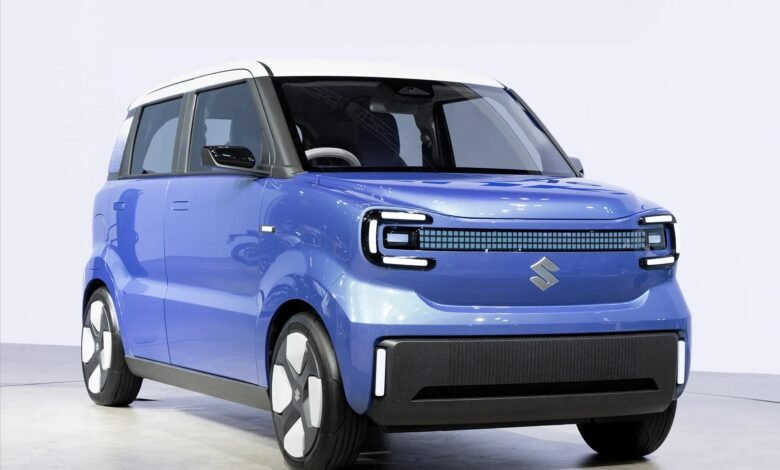
Battery efficiency has quietly become the real battleground in the electric vehicle industry, and a new comparison between the Suzuki e SKY and the BYD Racco shows exactly why. According to a recent report from Tech Times, the Suzuki e SKY manages to pull 193 miles of range from a relatively modest 26 kWh battery pack. That’s a number worth pausing on, because most small EVs need far more capacity to hit similar range figures.
The BYD Racco, by comparison, reportedly requires 38% more battery capacity to achieve a comparable driving range. That gap matters. It’s not just a spec sheet curiosity, it’s a direct reflection of how differently these two manufacturers have approached vehicle weight, motor efficiency, and overall engineering philosophy.
For everyday drivers, this difference translates into real costs and real trade-offs, from how much you pay for the battery itself to how long it takes to charge and how much the car weighs on the road. In this article, we’ll break down what’s driving this efficiency gap, what it means for buyers comparing these two small EVs, and why battery efficiency is quickly becoming just as important as raw battery size in the electric vehicle conversation.
What Is the Suzuki e SKY?
The Suzuki e SKY is Suzuki’s compact electric vehicle entry, built around the idea that smaller, lighter, and more efficient can beat bigger battery packs on both cost and practicality. Suzuki has a long history of building small, fuel-efficient cars for crowded urban markets, particularly in Japan and parts of Asia, and the e SKY appears to carry that same design philosophy into the EV space.
Rather than chasing the biggest possible range number by stuffing in a massive battery, Suzuki’s approach with the e SKY seems focused on getting the most mileage out of every kilowatt-hour. That’s a meaningful distinction in a market where automakers often market range numbers without explaining how much battery it actually took to get there.
Suzuki e SKY Efficiency: 193 Miles From a 26 kWh Battery
This is the headline figure, and it’s worth breaking down properly. The Suzuki e SKY reportedly achieves 193 miles of range using a 26 kWh battery pack. To put that in context, many EVs on the market today need battery packs in the 40 to 60 kWh range to hit similar mileage.
Breaking Down the Math
Doing simple division, 193 miles divided by 26 kWh works out to roughly 7.4 miles per kWh. That’s an exceptional efficiency figure for any production EV, let alone a mass-market compact car. For comparison:
- Many compact EVs today average somewhere between 3.5 and 4.5 miles per kWh
- Highly efficient EVs, like some Tesla and Hyundai models, can push closer to 4 to 4.5 miles per kWh under ideal conditions
- The Suzuki e SKY’s reported 7.4 miles per kWh would place it well above typical efficiency benchmarks
If these figures hold up in real-world testing, the Suzuki e SKY would represent one of the more efficient small EVs available anywhere, not just in its immediate class. That kind of efficiency usually comes down to a combination of low vehicle weight, an aerodynamically efficient body, and a motor and inverter setup tuned for minimal energy loss.
BYD Racco’s Battery Requirement: 38% More Capacity Needed
On the other side of this comparison sits the BYD Racco, which reportedly needs 38% more battery capacity to achieve range figures comparable to the Suzuki e SKY. BYD is one of the largest EV and battery manufacturers in the world, known for its in-house Blade Battery technology and its dominance in the Chinese EV market, so this gap is notable.


Why the Gap Exists
There are a few likely explanations for why the BYD Racco needs a larger battery to keep pace:
- Vehicle weight – If the Racco is heavier than the e SKY, it will naturally require more energy to move the same distance.
- Aerodynamics – Body shape and drag coefficient play a major role in highway efficiency specifically.
- Motor and drivetrain tuning – Not all electric motors and inverters are equally efficient at converting stored battery energy into forward motion.
- Battery chemistry trade-offs – BYD’s Blade Battery technology, built on lithium iron phosphate (LFP) cells, is known for safety and longevity but is sometimes less energy-dense by weight than nickel-based alternatives, which can require larger packs to hit the same range.
None of this means the BYD Racco is a poorly built car. BYD has built its reputation on safety, affordability, and scale. But it does suggest that Suzuki has prioritized a different engineering trade-off, leaning harder into weight reduction and efficiency rather than sheer battery size.
Why Battery Efficiency Matters More Than Battery Size
It’s easy to assume that a bigger battery is simply a better battery. More kWh should mean more range, right? In practice, it’s more complicated than that, and efficiency is often the more important number for everyday drivers.
Cost Implications
Battery packs are the single most expensive component in any EV. According to data tracked by the International Energy Agency, battery pack costs, while falling steadily over the past decade, still represent a significant share of total vehicle production cost. A car that needs 38% less battery capacity to achieve the same range has a real shot at being meaningfully cheaper to build and, ideally, cheaper to buy.
Weight and Handling
Smaller battery packs mean lighter vehicles. Lighter vehicles handle better, brake shorter, and put less strain on tires and suspension components over time. A more efficient EV like the Suzuki e SKY doesn’t just save money on the battery itself, it can improve the overall driving experience.
Charging Time
A smaller battery pack, all else being equal, typically charges faster in absolute terms because there’s simply less energy to push into it. For drivers who rely on public charging infrastructure rather than home charging, this can be a meaningful practical advantage.
Environmental Footprint
Battery production is resource intensive, requiring lithium, cobalt, nickel, and other raw materials that come with their own environmental and supply chain challenges. A vehicle that achieves strong range with a smaller pack, like the Suzuki e SKY appears to, requires fewer raw materials per vehicle produced. The U.S. Department of Energy has noted that improving vehicle efficiency is one of the most direct ways to reduce the overall material demand of the EV transition, a point echoed across multiple U.S. Department of Energy vehicle technology reports.
Suzuki e SKY vs BYD Racco: Head-to-Head Comparison
Here’s a simplified side-by-side look at what’s being reported:
| Factor | Suzuki e SKY | BYD Racco |
|---|---|---|
| Battery capacity | 26 kWh | Approximately 38% larger |
| Estimated range | 193 miles | Comparable range, larger pack required |
| Efficiency (miles/kWh) | Roughly 7.4 | Lower, due to larger pack for similar range |
| Likely market focus | Compact, efficiency-first urban EV | Mass-market EV with proven battery tech |
| Battery technology | Not fully detailed | Reportedly aligned with BYD’s Blade Battery (LFP) approach |
This table isn’t meant to declare an outright winner. Both vehicles serve different market strategies. But it does illustrate how two automakers can approach the same basic goal, an affordable and practical small EV, with very different engineering priorities.
What This Means for EV Buyers
If you’re shopping for a small electric vehicle, this comparison offers a few practical takeaways worth keeping in mind:
- Don’t just look at range numbers. Ask what size battery it took to get there. A 200-mile range from a 30 kWh pack is a very different achievement than 200 miles from a 60 kWh pack.
- Efficiency often predicts real-world performance better than lab range figures. Vehicles with higher miles-per-kWh ratings tend to hold up better in cold weather, highway driving, and other range-reducing conditions.
- Smaller batteries can mean lower long-term costs. Battery replacement, where it’s ever needed, is generally cheaper for smaller packs.
- Weight matters for more than just range. A lighter, more efficient car like the Suzuki e SKY may offer a noticeably different driving feel compared to a heavier EV carrying a larger battery.
The Bigger Picture: Efficiency in the Global EV Race
The comparison between the Suzuki e SKY and the BYD Racco fits into a broader trend happening across the EV industry right now. As battery raw material costs remain a persistent concern and automakers look for ways to make EVs more affordable without cutting corners on range, efficiency is becoming a genuine competitive advantage rather than a footnote.
Japanese automakers, including Suzuki, have historically built their brand identity around compact, fuel-efficient vehicles, and that engineering discipline appears to be translating directly into the EV space. Meanwhile, Chinese manufacturers like BYD have focused heavily on battery manufacturing scale and cost reduction, sometimes at the expense of squeezing out every last mile per kWh.
Neither approach is inherently wrong. But as more automakers enter the small EV segment, especially in price-sensitive markets, efficiency numbers like the ones reported for the Suzuki e SKY could become a genuine differentiator, not just a marketing talking point.
Conclusion
The reported gap between the Suzuki e SKY, which reaches 193 miles of range from a 26 kWh battery, and the BYD Racco, which needs roughly 38% more battery capacity to hit similar numbers, highlights just how much engineering efficiency can influence the real-world value of an electric vehicle. Battery size alone doesn’t tell the full story. What matters just as much, if not more, is how efficiently a vehicle converts every kilowatt-hour into usable range. As the EV market matures and buyers become more educated about these trade-offs, efficiency-focused designs like the Suzuki e SKY may end up setting the benchmark that other automakers, including major players like BYD, will need to chase.